Services
Six services, shaped
around the operation.
We combine operational review with the right systems and automation to address a clearly defined business problem.
Systems & Automation Review
Find the friction before building the solution.
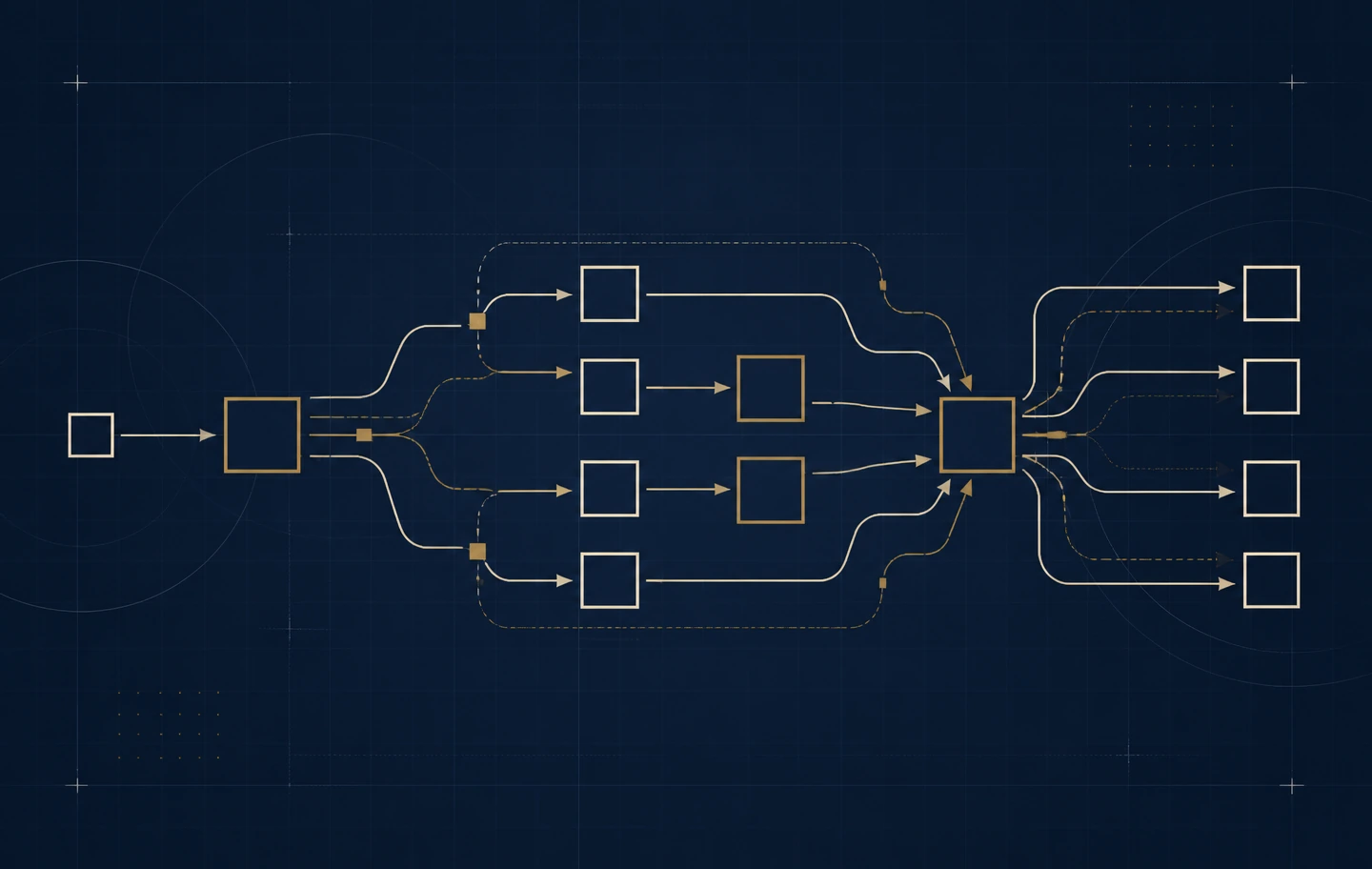
We conduct a focused review of how work moves through the organization—where it slows down, where systems disconnect, and where improvement will have the greatest impact.
- Goal
- Create a clear view of where work slows, systems disconnect, information is lost, and ownership breaks down.
- Approach
- Review the workflow end to end, then evaluate impact, effort, urgency, dependencies, ownership, and operational readiness.
- Deliverable
- A prioritized systems roadmap containing the current-state workflow, identified constraints, recommended interventions, sequencing, and named ownership.
Process Design
Turn inconsistent work into a clear, repeatable process.
We design practical workflows around how the business actually operates—defining the steps, ownership, handoffs, decisions, and exceptions required to keep work moving consistently.
- 01
Define
Establish what starts the process and the outcome it must produce.
- 02
Sequence
Define the steps required to move the work from start to finish.
- 03
Assign
Establish clear ownership for actions and decisions.
- 04
Handoff
Define how work moves between people, teams, and systems.
- 05
Handle exceptions
Establish clear paths for work outside the normal process.
- 06
Document
Create a repeatable operating process the team can follow.
- Goal
- Create a clear, repeatable way of working that reduces ambiguity, inconsistent execution, and dependence on individual knowledge.
- Approach
- Define the trigger, required steps, decision points, ownership, handoffs, exception paths, and expected outcome before documenting the operating process.
- Deliverable
- A documented operating workflow with defined steps, responsibilities, decision points, handoffs, exception handling, and named ownership.
Workflow Automation
Reduce repetitive effort and keep routine work moving consistently.
We automate defined workflows so information reaches the right place, routine actions happen on time, and exceptions remain visible.
- 01Intake
A request or event enters through a defined channel.
- 02Validate
Required fields, permissions, and conditions are checked.
- 03Route
Logic sends the item to the right owner or system.
- 04Act
The routine action is executed automatically.
- 05Track
Status, timing, and outcome are recorded.
Routine work moves automatically
Exceptions reach the right person
Every outcome stays visible
- Goal
- Reduce repetitive work without sacrificing visibility, judgment, or operational control.
- Approach
- Define the trigger, routing logic, actions, exception conditions, ownership, and required records before automating.
- Deliverable
- A working automated workflow with documented logic, accountable exception handling, visible outcomes, and an operating guide.
Systems Integration
Move information reliably between existing tools without duplicate entry.
We connect the systems already supporting the operation so required information moves consistently and failures remain visible.
- 01Source systemThe record of origin for a defined data set.
- 02Required fieldsOnly the information the receiving system needs.
- 03ValidationFormat, completeness, and duplication checked in transit.
- 04Target systemWritten once, without duplicate manual entry.
- 05Failure visibilityRejected transfers surface with cause and owner.
- Goal
- Reduce duplicate entry and keep required information consistent across the systems that support the operation.
- Approach
- Define source fields, destination fields, transfer rules, validation conditions, failure handling, ownership, and monitoring.
- Deliverable
- A documented working integration with field mappings, transfer logic, validation, visible failure handling, monitoring, and named ownership.
Internal Tools & Dashboards
Give teams one focused place to manage work and see important information.
We organize scattered operational information into a usable internal application or management view aligned to the team’s responsibilities.
Before — information scattered
- Spreadsheet trackers
- Email threads
- Shared drive files
- Verbal updates
- Separate system exports
- Personal task lists
After — one operational view
- CaptureRelevant information entered once, in one place.
- OrganizeStructured around the work, not the software.
- ActTeams manage assignments, status, and exceptions.
- SeeLeadership reads the same operational picture.
- Goal
- Give the team a focused operational view that supports action, ownership, and management visibility.
- Approach
- Define the workflow, required information, user responsibilities, permissions, actions, and reporting needs before designing the tool.
- Deliverable
- A purpose-built internal tool or dashboard with defined data, user roles, operating logic, permissions, and documented ownership.
Ongoing Improvement
Keep implemented systems reliable and aligned as the operation changes.
We monitor and refine implemented systems through a controlled process that preserves documentation, accountability, and operational ownership.
- MonitorContinuousFailures, queues, and exceptions are watched, not assumed.
- MeasureMonthlyAgreed operational measures reviewed against a baseline.
- RefineAs justifiedChanges made when evidence supports them, not on schedule.
- DocumentOn changeLogic, ownership, and exceptions kept current.
- OwnershipStandingA named internal owner for every implemented system.
- Goal
- Keep implemented systems reliable, measurable, maintainable, and aligned with the changing operation.
- Approach
- Monitor performance, review exceptions, compare results to the baseline, control changes, update documentation, and maintain named ownership.
- Deliverable
- A maintained operational system with monitoring criteria, documented changes, current operating documentation, review cadence, and accountable ownership.